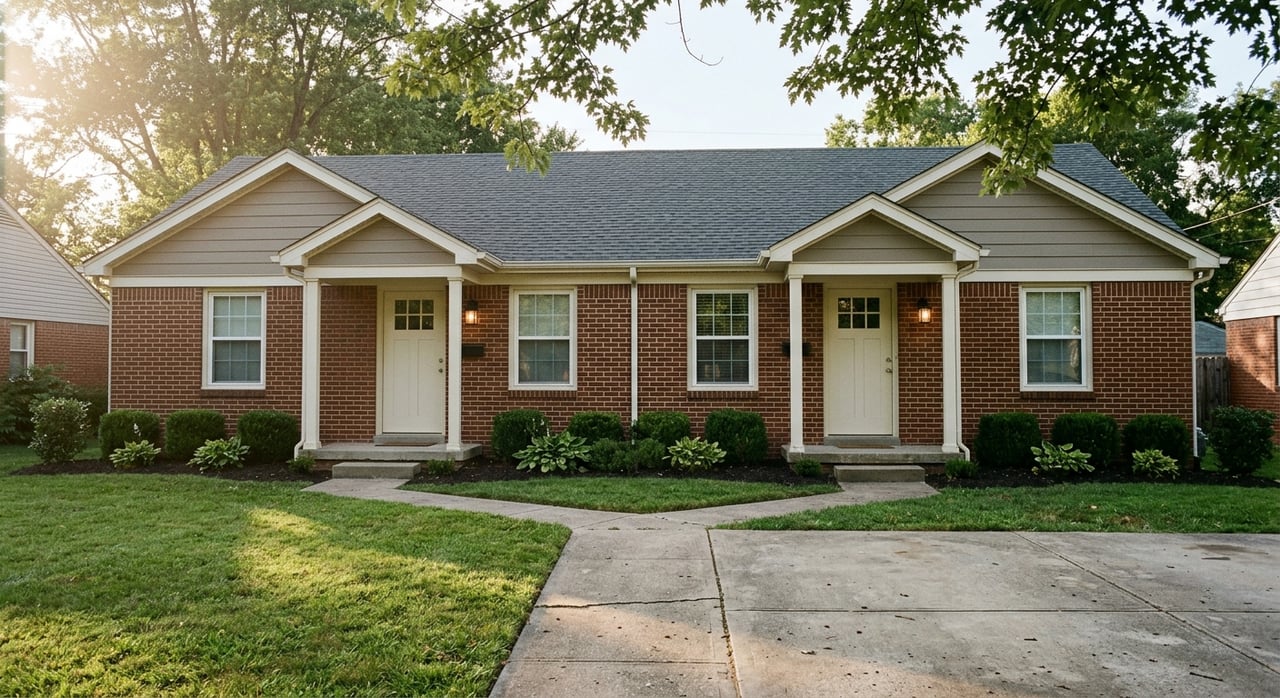
A Beginner’s Guide to High Point Investment Properties
May 21, 2026
May 21, 2026
If you have been thinking about buying an investment property in High Point, you are not alone. Many first-time investors are drawn to the Triad because prices can feel more approachable than in larger markets, but that does not mean every property is a good deal. The good news is that with the right numbers, local context, and a clear process, you can evaluate opportunities with much more confidence. Let’s dive in.
High Point offers a mix of market stability and variety that often appeals to beginners. The city’s April 1, 2026 population estimate was about 119,205, and the city added 2,627 net housing units from 2020 through March 2026. That kind of growth does not guarantee strong returns, but it does show an active housing market with ongoing demand.
The local economy also gives useful context when you are sizing up rental demand. High Point’s January 2026 snapshot listed a labor force of 58,116, 623 jobs added in 2025, unemployment at 5.2%, median household income at $64,561, and an average commute of 21 minutes. For a new investor, those are the kinds of practical indicators that help you understand who may be renting and how the market functions day to day.
At the same time, this is not a market where you should assume fast appreciation or automatic rent growth. Zillow currently labels the rental market as cool, with 256 available rentals, and HUD described the broader Greensboro-High Point sales and apartment markets as balanced in late 2024. In plain terms, that means disciplined underwriting matters.
If you are buying your first investment property, simple is usually better. High Point’s housing profile leans more single-family than nearby Greensboro or Winston-Salem, and city planning data show approvals across single-family detached homes, townhomes, and apartments. That gives you options, but not every option is equally beginner-friendly.
For many first-time investors, single-family rentals are the easiest place to start. They are usually simpler to finance, easier to understand from a maintenance standpoint, and often easier to resell later. If the numbers work, a townhome or small multifamily property can also be worth a look, especially if you want a different balance of rent potential and upkeep.
The key is to match the property type to your comfort level, budget, and management plan. A deal that looks great on paper can still become stressful if it needs heavy rehab, complex permitting, or a use change you did not plan for.
Before you fall in love with a property, get grounded in local pricing and rent ranges. High Point’s city snapshot lists a median home value of $235,800 and median rent of $1,116. Zillow shows an average home value of $251,699, a median sale price of $240,667, a median list price of $275,267, and homes going pending in about 20 days.
Rental data also varies by source, which is normal. RentCafe reports an average apartment rent of $1,241, Zillow’s all-property average rent is $1,450, Zillow’s two-bedroom average is $1,199, and HUD’s FY2025 two-bedroom fair market rent for the Greensboro-High Point metro is $1,463. The point is not to pick the highest number. The point is to understand the spread and verify what applies to your specific property.
A quick gross-rent screen can help you compare deals early. Using Zillow’s average rent and average home value, the rough gross-rent figure is about 6.9%. Using RentCafe’s average rent and the city’s median home value, it comes out closer to 6.3%.
That screen is helpful, but it is only a starting point. It does not include taxes, insurance, vacancy, repairs, turnover, or property management. If you rely on a broad market average without checking the actual neighborhood and property condition, your estimate can drift fast.
One of the biggest mistakes new investors make is underestimating holding costs. In High Point properties located in Guilford County, the current county tax rate is 73.05 cents per $100 of assessed value, and the City of High Point’s adopted FY 2025-26 rate is 64.75 cents per $100. Combined, that is about 1.378% of assessed value.
That works out to roughly $3,445 a year on a $250,000 taxable value and about $4,134 a year on a $300,000 taxable value. Those are meaningful costs, especially if you are buying with financing and trying to preserve monthly cash flow. Taxes alone can shift a deal from workable to thin.
There is another local detail you should not overlook. Guilford County revalues real estate every five years, and the county is in the 2026 reappraisal cycle. That means your future tax bill can change even if the tax rate stays the same, so your underwriting should leave room for movement.
Also, High Point properties in Guilford County are billed by Guilford County, so confirm the parcel’s county before you finalize your numbers. In a city that spans more than one jurisdiction, details like that matter.
A fixer-upper can look like a shortcut to equity, but only if you understand the local process. High Point requires permits for most construction work, and the city generally requires a state-licensed contractor on projects of $40,000 or more or on work involving plumbing, mechanical, electrical, fire protection, or gas systems. The city also issues certificates of occupancy or compliance after final inspection.
For a first-time investor, that means rehab budgets need to include more than labor and materials. You should account for permit timing, inspection timing, contractor requirements, and the possibility that the property cannot be occupied until the process is complete. Delays cost money, especially when a property is sitting vacant.
Code enforcement also matters. The city says owners must secure and maintain closed dwellings, and issues like overgrown grass, trash, standing water, and infestation can trigger nuisance enforcement. If you are carrying a property during repairs, exterior upkeep is not optional.
When you are new to investing, a repeatable checklist can keep emotions from driving the decision. Instead of asking whether a property feels like a deal, ask whether it clears a consistent set of tests.
Start with the exact property location and tax jurisdiction. Verify whether the parcel is in Guilford County and how it is assessed. Since reappraisal can affect future costs, this step matters more than many beginners realize.
Do not rely on one portal average. Pull a realistic rent comp set for similar properties and compare size, condition, bed-bath count, and location. Your pro forma should reflect what that specific property can reasonably command, not the highest rent you can find online.
If the property has been updated, check what work was done and whether permits were required. If you plan to renovate, make sure your budget and timeline reflect city permit rules, inspections, and contractor requirements. A cheap property can get expensive fast when the work plan is incomplete.
Your numbers should include more than principal, interest, taxes, and insurance. Add vacancy, maintenance, repairs, insurance, and reserves. If there is an HOA, include that too.
Before you submit an offer, know whether you plan to hold, refinance, or sell. Your financing, repair scope, and target returns should line up with that plan. A property that works as a long-term rental may not work as a quick resale, and vice versa.
New investors usually do not get in trouble because they forgot one big thing. More often, they stack several small assumptions that all lean too optimistic.
Here are a few mistakes to watch for:
The goal is not to avoid every risk. The goal is to understand the risks before you commit.
Real estate investing is numbers-driven, but local execution matters just as much. In High Point, parcel jurisdiction, permit requirements, and reappraisal timing can all affect your returns. Those are not details you want to discover after you are under contract.
That is why many first-time investors benefit from a local review process before making an offer. The research here points to a smart habit: have a local agent, lender, CPA, and attorney review the file together before you move forward. When your advisors are aligned early, you are far less likely to miss a cost, timing issue, or compliance detail.
If you are looking at High Point investment properties, a calm, fact-based approach will serve you well. The right opportunity is not just about finding a low price. It is about finding a property where the rent, taxes, condition, and long-term plan all make sense together.
If you want a second set of eyes on a deal in High Point or anywhere in the Triad, Heidi Christie can help you evaluate the numbers, the property story, and the local considerations with a practical, solution-first approach.
September 17, 2026

September 10, 2026

September 3, 2026

August 27, 2026
August 20, 2026
August 13, 2026
August 6, 2026

August 6, 2026
July 23, 2026
Trust her 22+ years of care, discretion, and real estate savvy in Winston-Salem. From residential homes to commercial listings, she brings precision, professionalism, and a seamless experience.