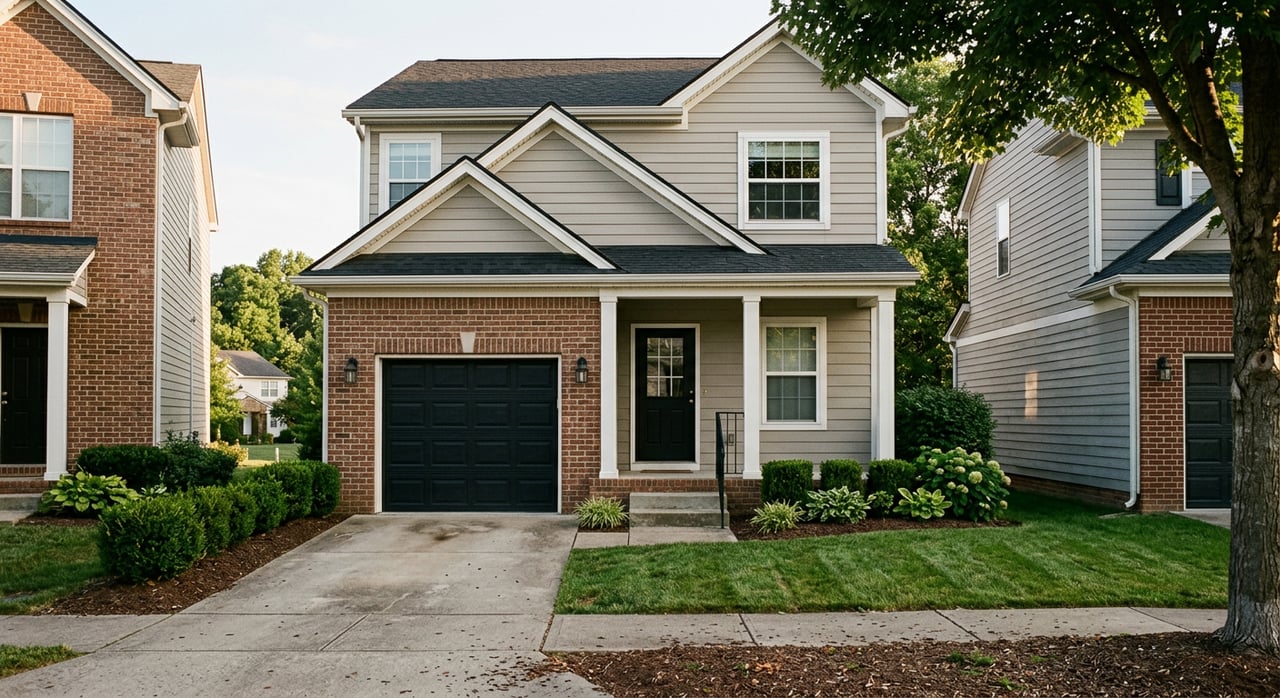
Greensboro Townhomes for Sale: A First-Time Buyer Guide
March 5, 2026
March 5, 2026
Buying your first home in Greensboro does not have to mean a big yard or heavy maintenance. Many first-time buyers start with a condo or townhome to keep monthly costs predictable and stay close to work, school, or favorite spots. If that sounds like you, this guide will help you weigh price ranges, HOA fees, financing, and the documents to review before you commit. You will walk away with a simple checklist you can use on any condo or townhome in Guilford County. Let’s dive in.
Condos and townhomes often cost less than similar detached homes in Greensboro, which can help you enter the market sooner. They also shift some upkeep to the association, so you spend less time on exterior maintenance. Many buildings include amenities like pools or clubhouses that would be costly to maintain on your own. The tradeoff is HOA rules and monthly dues, so understanding what you own and what you owe is key.
Local listing pages show a wide range. Entry-level condos, especially older garden-style units, commonly appear in the low-to-mid $100,000s to about $170,000 for 1 to 2 bedrooms. Townhomes across Greensboro often run in the $170,000 to $260,000 range, with some higher-amenity or historic/downtown options reaching $300,000 and above. Always check live MLS data for current pricing in your target area.
If you want to scan active inventory, start with the broader condo pages to see pricing trends and building types across Greensboro. You will find more condos near downtown and university corridors, plus garden-style complexes along the Wendover and Friendly Center areas. Townhome clusters are common near Battleground and New Garden corridors and in select suburban infill spots.
Condo and townhome are building styles, but the legal setup controls who maintains what. In North Carolina, condos follow state condominium laws and a recorded declaration that defines unit boundaries and common elements. For planned communities with HOAs, the community documents set the rules. You can review the state’s condominium statute overview to understand how “unit” versus “common” elements are defined under North Carolina law.
Bottom line: Exact maintenance lines live in the declaration and CC&Rs. Always confirm where the “walls” are for your responsibility versus the HOA’s.
Monthly dues in Greensboro vary by building, age, and services. Many small or garden-style associations land in the low hundreds per month, while larger buildings with elevators, pools, security, or extensive common systems can be much higher. What matters most is what those dues include.
Here is what condo HOAs commonly cover:
Townhome coverage varies more. You might be responsible for the exterior facade, limited yard space, and driveway unless the documents say otherwise. To learn more about rights and responsibilities in North Carolina HOAs, review the state’s consumer guidance on homeowners associations.
Financing condos and townhomes is common, but lenders review the project as well as your loan. Conventional loans (Fannie Mae and Freddie Mac), FHA, VA, and state programs can all work for attached housing.
Practical lender checkpoints to keep in mind:
These items affect both your loan approval and future resale value.
You will likely carry an HO-6 condo policy that covers your unit’s interior, personal property, liability, and loss of use. The HOA carries a master policy that covers common elements and the building structure. Coverage type matters. Some master policies are “walls-out” or “bare walls,” while others are “all-in.” Ask how the master policy interacts with your HO-6 and how building deductibles get allocated to owners after a loss. For a simple primer, review what a condo association policy typically covers in this master policy overview.
If a building is in a flood zone, the association may carry a Residential Condominium Building Association Policy. Your lender will confirm whether flood insurance is required.
Treat the HOA package like a mini financial statement for the building. Request these items before or right after you go under contract:
Red flags to watch: underfunded reserves, repeated special assessments, high HOA delinquencies, large pending litigation, or transfer rules that complicate resale.
Use your senses during showings and while walking common areas. A tidy, well-lit lobby and clean mechanical rooms suggest good upkeep.
If the building has shared systems, hire a home inspector with condo or townhome experience. This helps you spot issues that are easy to miss.
Greensboro buyers often track principal and interest, then forget variable costs. Build a full monthly picture so you are not surprised later.
Guilford County kept the property tax rate for FY 2025–2026 at 73.05 cents per $100 of assessed value. You can confirm this in the county’s budget announcement. For example, if your condo is assessed at $200,000, county taxes would be about $1,461 per year. City taxes and any special districts are separate, so ask your lender for a full escrow estimate.
You do not have to manage all of this alone. If you want a calm, organized path to your first home in Greensboro, connect with someone who works across the Triad and understands how HOAs and lender rules play together.
Ready to compare options or want a second set of eyes on HOA documents and lender fit? Reach out to Heidi Christie to map your next steps.
July 23, 2026
July 16, 2026
July 9, 2026
July 2, 2026

June 25, 2026
June 18, 2026
June 11, 2026
June 4, 2026
May 28, 2026
Trust her 22+ years of care, discretion, and real estate savvy in Winston-Salem. From residential homes to commercial listings, she brings precision, professionalism, and a seamless experience.